
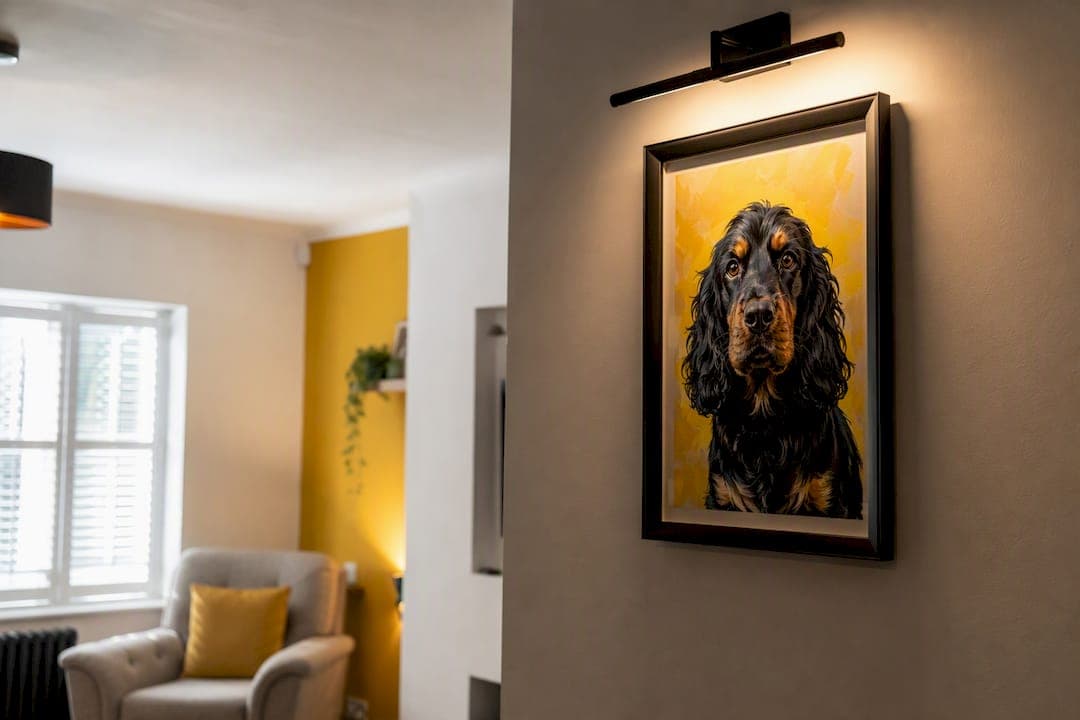
For a single framed piece, a warm-white LED picture light with a CRI of 90 or higher and a colour temperature between 2700K and 3000K is the safest bet. Building a collection or working with a rented wall? Adjustable track spotlights or a rechargeable picture light give you more flexibility without an electrician. Skip halogen entirely: it runs hot, throws UV, and fades pigments faster than LED ever will.
TL;DR:
- Use LED picture lights with a CRI of 90+ and a color temperature between 2700K and 3000K for optimal color rendering and warmth.
- For growing collections or rented spaces, rechargeable or adjustable fixtures provide flexibility without the need for an electrician.
- Mount fixtures at specific angles, 5 to 10 cm above the frame, and select sizes spanning two-thirds to three-quarters of the artwork's width for even lighting.
- Check that fixtures have a beam spread controlled by optics, and confirm dimming compatibility and R9 red rendering values before purchase.
- Match the fixture type to the artwork, such as picture lights for single pieces and track spotlights for galleries or collections, and aim for a 30-degree angle from the fixture to the art.
Table of Contents
- How to choose lighting for wall art that actually flatters it
- What should you check before buying an art light?
- Which fixture type suits your wall art?
- How do you position lighting for wall art correctly?
- What colour temperature and CRI does wall art need?
- Hardwired, plug-in, or rechargeable: which power option fits?
- What a good frame and light pairing actually does for a portrait
- Give your commission the light it deserves
- Sources
How to choose lighting for wall art that actually flatters it
Not every fixture suits every piece, and the shortlist below reflects that. A small watercolour behind glass needs a different approach to a large oil painting or a gallery wall of framed prints, so this list is organised by what you're actually trying to light rather than by brand.
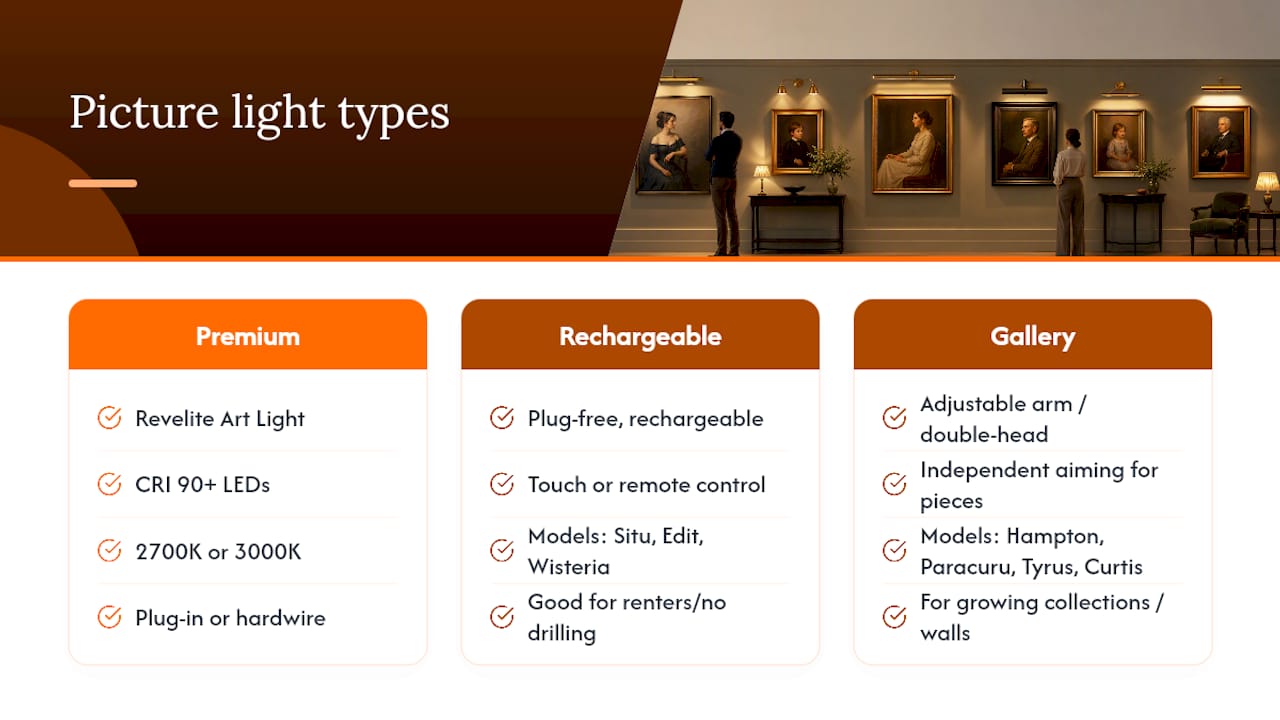
If you own one statement piece, look at dedicated picture lights first. Revelite's Art Light is worth knowing about here: it's custom-sized to the artwork, built with CRI 90+ LEDs, and offered in 2700K or 3000K, with either plug-in or hardwire mounting. It sits at the premium end, but the uniform vertical wash it produces is genuinely difficult to replicate with an off-the-shelf fixture.
For traditional brass and antique finishes, names like House of Troy, Turner picture light, and the Turner Switched Small Picture Light Antique Brass turn up again and again in period homes and formal rooms. Mullan Lighting publishes a useful buyer's guide alongside its own picture light range, and its recommendations on colour temperature are worth following regardless of which fixture you end up choosing.
If you rent, or you simply don't want to drill into a wall, rechargeable and touch-operated options solve the problem outright. The Situ Lighting Rechargeable Picture Light, the Edit Slimline 400 USB Rechargeable LED Touch Picture Light, both Wisteria Willow 400 USB Rechargeable models (one with remote control), the Herron LED Black Rechargeable Picture Light, the Holton LED Black Rechargeable Picture Light, and the Vigo LED Rechargable Gold Metal Picture Light all sit in Situ Lighting's catalogue of low-intrusion, plug-free fixtures.
For gallery walls and collections that will grow, adjustable arm and double-head fixtures earn their keep: the Hampton Large Double, Hampton Small Double, and Hampton Large Single LED Picture Light, the Paracuru LED Large Double Picture Wall Light, the Tyrus LED Large and Small Picture Light, and the Curtis Flexible LED Picture Lights all allow independent aiming across multiple pieces.
What should you check before buying an art light?
Get past the marketing photos and look at the spec sheet. Priority order matters here, because a fixture can look right and still light your artwork badly.
- CRI first, always. Anything under 90 will mute reds and skin tones, which matters enormously for portraits.
- Colour temperature (CCT). Stick to 2700K–3000K for oils, acrylics, and most prints; only step up to 3500K–4000K for black-and-white or cool-toned photography.
- Beam optics. Ask whether the fixture uses a lens or reflector to control spread. A cheap LED strip without optics just floods the wall.
- Dimming compatibility. If you want to dim, confirm the driver is compatible with your dimmer type before you buy, not after.
- Warranty and R9 value. R9 measures red rendering specifically. Ask for it if it isn't published, and check warranty length against the LED driver's expected lifespan.
Red flags: no CRI figure listed anywhere, "warm white" with no Kelvin number given, and returns policies that exclude hardwired fixtures once installed.
Pro Tip: Email the retailer and ask for the R9 value directly. If they can't answer, the fixture almost certainly wasn't tested for colour accuracy beyond a basic CRI average.
Which fixture type suits your wall art?
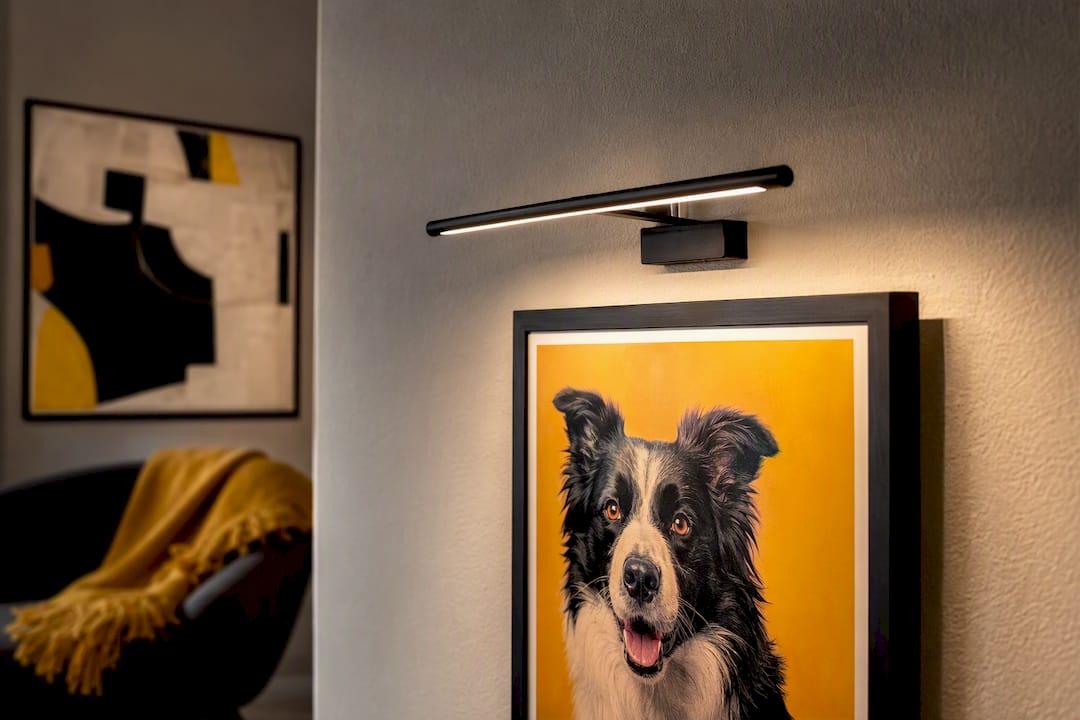
Picture lights mount directly above the frame and wash light down the surface. They're the tidiest option for a single piece and the most common choice for portraits and framed prints.
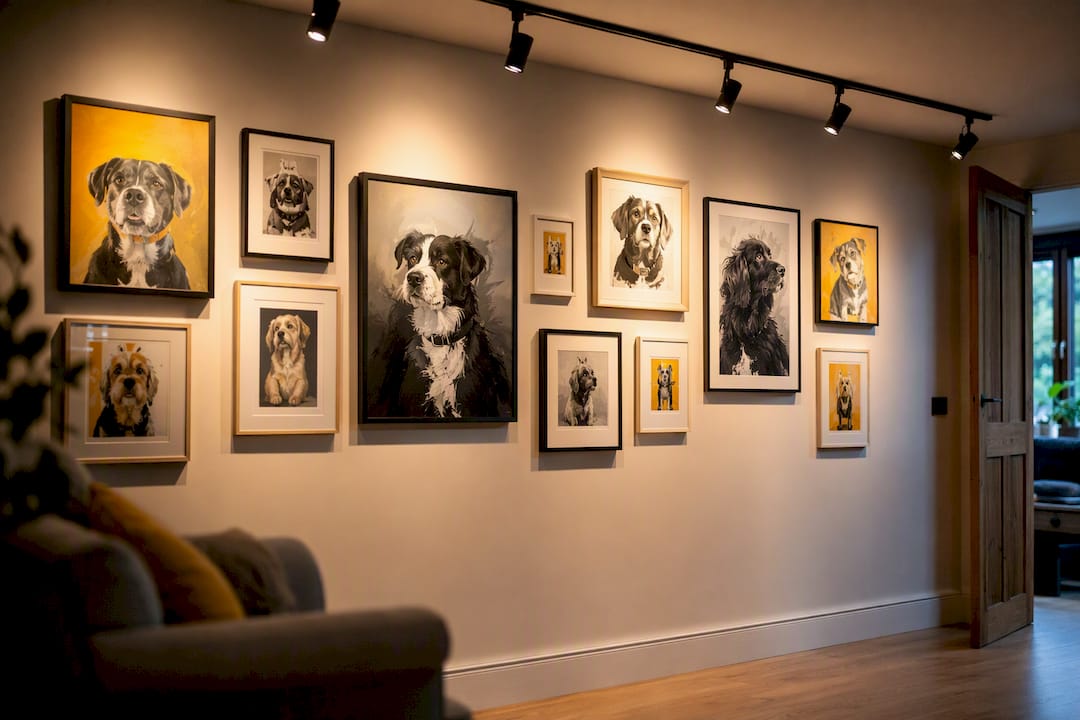
Track spotlights clip onto a ceiling-mounted rail and can be repositioned as your collection changes. They suit gallery walls, rented spaces where you're not ready to commit to fixed positions, and anyone who rehangs work often.
Recessed or wall-washer downlights sit flush in the ceiling and spread light evenly across a whole wall. Christie's notes that grid-heavy downlighting can flatten art, so use wall-washers sparingly and pair them with a dedicated accent light on the piece itself.
Uplighters placed on the floor or a plinth throw light upward, which works well for sculpture or textured pieces but rarely suits flat framed work.
- Single framed piece: picture light
- Gallery wall or growing collection: track spotlights
- Textured impasto or sculpture: uplighter or steeper-angled spotlight
- Glass-covered prints: picture light or spotlight angled to avoid reflections
- Rented flat: rechargeable picture light
How do you position lighting for wall art correctly?
Aim for a 30-degree angle from the fixture to the artwork's centre, as recommended by lighting specialists working from museum practice. Steepen it to around 25 degrees for heavily textured or impasto surfaces, where you want shadow to bring out brushwork, and widen it slightly toward 35 degrees if you're getting glare off glazed pieces.
- For a standard 2.4-metre ceiling, mount track spotlights roughly 60 to 90cm out from the wall to hit that 30-degree angle.
- Mount picture lights 5 to 10cm above the top of the frame.
- Choose a fixture that spans roughly two-thirds to three-quarters of the artwork's width to avoid a single bright hotspot in the centre.
- Stand at your normal viewing spot and adjust in small increments, checking for glare off glass or varnish as you go.
- Decide early whether you're hardwiring or plugging in. Hardwiring gives a cleaner finish but locks the position; plug-in and rechargeable options let you move things later.
Pro Tip: Adjust from where you'll actually stand to look at the piece, not from a stepladder next to the fixture. Glare that's invisible up close often shows up clearly from six feet back.
What colour temperature and CRI does wall art need?
LED wins over halogen on every practical measure that matters for artwork: it runs cool, emits negligible UV, and holds its colour output steady even when dimmed, which Revelite notes is where older halogen picture bulbs typically degrade.
- General oils, acrylics, and mixed media: 2700K–3000K, CRI 90+
- Black-and-white or cool-toned photography: 3500K–4000K
- Anywhere colour fidelity is critical: check R9 as well as the headline CRI figure
- Watercolours, prints, and other works on paper: keep light levels low, ideally close to the 50 lux conservators recommend for sensitive media
That 50 lux figure is a genuinely useful benchmark. It's roughly the brightness of a dim, overcast room, far lower than most people instinctively set a picture light. A dimmer switch and, for particularly light-sensitive originals, UV-filtering glazing are the two easiest ways to stay within that range without living in a dark room.
Hardwired, plug-in, or rechargeable: which power option fits?
Hardwired fixtures give the cleanest finish and no visible cable, but they're fixed once installed and usually need an electrician, particularly if you're feeding several lights from one supply. Plug-in models trade a visible cord for flexibility. Rechargeable and touch-operated fixtures need no wiring at all, which makes them the obvious choice for rented walls or artwork that moves around.
- Specialist manufacturers (Revelite, Mullan Lighting) for bespoke or colour-critical installations
- General UK lighting retailers for mid-range brass, bronze, and modern finishes such as the Abbeville, Rhodes, or Santorini ranges
- Rechargeable specialists (Situ Lighting) for wireless, low-intrusion options
- Expect product pages to list CRI, CCT, and mounting type as standard; if they don't, ask before buying
- Budget generally ranges from affordable basic rechargeable units to mid-range hardwired or brass fixtures, with bespoke, custom-sized units costing more.
- A professional installer earns their fee once you're wiring multiple fixtures off a shared low-voltage supply, where sizing the supply correctly and keeping the wiring compliant genuinely needs a qualified electrician
What a good frame and light pairing actually does for a portrait
Good lighting should read as invisible, drawing the eye to the piece rather than the fixture. A warm 2700K light flatters most skin tones and fur colours in a commissioned portrait, while a darker frame usually wants slightly more lumens than a pale one to avoid looking muddy.
I've seen plenty of beautifully commissioned pieces undersold by a stray downlight or the wrong bulb. Get the light right and the piece earns the wall space it deserves.
— Motley
Give your commission the light it deserves
Everything above assumes you already have a piece worth lighting properly. If you don't yet, a bespoke portrait is exactly the kind of artwork that rewards the effort: rich colour, real texture, and a palette worth rendering accurately rather than washing out under the wrong bulb. Motleystudio turns your own photos into a custom pet portrait built to hang and be lived with, whether it's a milestone piece or a memorial for a pet you've lost.

Because each piece is painted to order in a distinct style, from bold high-contrast work to softer traditional portraiture, it's worth picking your lighting setup with the finished piece in mind rather than as an afterthought once it arrives. Start the order on Motleystudio's website and you'll have a photo brief in the queue in a few minutes, ready to become the centrepiece your new picture light was bought for.
Sources
- Revelite art light overview — Revelite
- Picture Lights: Your complete guide to illuminating artwork — Mullan Lighting
- How to light artwork at home — Austin Gallery